A Girl on a Train
Play A Girl on a Train
A Girl on a Train Screenshots


A Girl on a Train review
Story, choices, and player experience in A Girl on a Train explained in a practical, player-focused way
A Girl on a Train is a story-focused, adult visual game set almost entirely on a late-night ride, where a chance encounter between the main character and a mysterious girl unfolds through dialogue, choices, and branching scenes. Players searching for A Girl on a Train usually want to know what kind of experience they are getting into: is it mostly story, mostly explicit, or a balanced mix of both? In this guide, I’ll walk you through the game’s core narrative, how the choices actually matter, and what my own playthroughs have taught me, so you can decide if it fits your tastes before you commit your time.
What Is A Girl on a Train and How Does It Play?
Ever stumbled upon a game that’s less about winning and more about just… being there? That’s my first impression of A Girl on a Train game. It’s an adult, story-driven visual novel that unfolds entirely during a single, quiet train journey. 🚂 If you’re picturing action or puzzles, think again. The core of this visual game on a train is a slow-burn narrative where you, as the player, navigate a conversation with a mysterious stranger. Your only tools are your words, your choices, and your perception. The entire experience is built on dialogue, mood, and the subtle consequences of what you choose to say. It’s a digital short story where you steer the protagonist’s curiosity, caution, or charm.
So, how does A Girl on a Train work? At its heart, it’s about managing a social interaction in a confined space. You read the dialogue, gauge the other character’s reactions, and select from options that range from friendly to forward. The A Girl on a Train story is drip-fed through these exchanges, with the game’s tension coming from the unknown—who is she, why is she here, and where might this night lead? This chapter is your practical guide to what that experience actually feels like, from the initial setup to the moment-to-moment A Girl on a Train gameplay.
A Girl on a Train: Core Concept and Story Setup
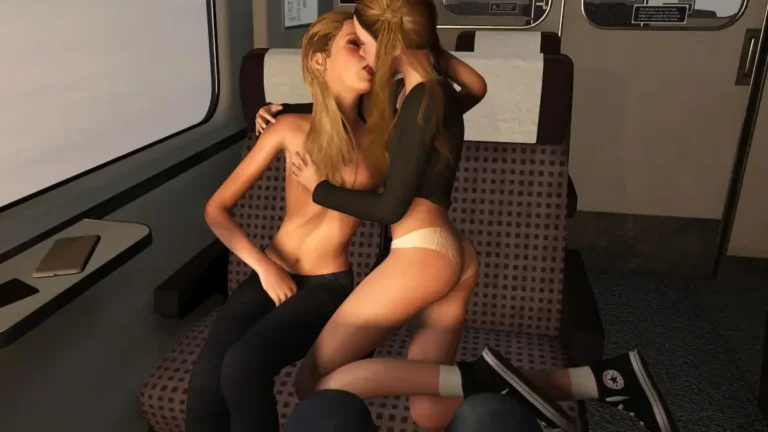
The premise is beautifully simple and instantly immersive. You find yourself on a nearly empty late-night train. The world outside is a blur of dark shapes and occasional distant lights. Inside, the atmosphere is thick with the low hum of the engine and the rhythmic clatter on the tracks. 🎧 The lighting is dim, maybe a single overhead light creating a small, intimate pool in the otherwise shadowy carriage. It’s just you, a few sleeping or absent-minded passengers, and her.
The A Girl on a Train game begins with that first glance. She’s sitting alone, perhaps looking out the window or lost in thought. The setup isn’t about a grand mystery or an urgent quest; it’s about a human connection (or the potential for one) in a transient, anonymous space. The game leans heavily on this atmosphere of quiet tension and ripe curiosity. Your goal isn’t to solve a crime, but to solve a person—to piece together her backstory through careful conversation and observation.
This is the foundation of the A Girl on a Train story. You are an active participant in a “getting to know you” dance, where every topic you broach and every question you ask (or avoid) shapes the path. Do you play it safe and talk about the weather or the lateness of the hour? Or do you venture into more personal territory? The narrative unfolds based on how bold or reserved you decide your character should be. There’s a palpable sense that this interaction is fleeting—once the train reaches its destination, this chance is gone. That “ticking clock” isn’t shown on a screen, but it’s felt in every line of dialogue.
How the Gameplay, Choices, and Pacing Really Feel
Now, let’s get practical. If you’re wondering how does A Girl on a Train work on a mechanical level, it’s refreshingly straightforward. This is a pure visual novel experience. The A Girl on a Train gameplay loop consists of three main actions:
1. Reading descriptive text and dialogue.
2. Making choices when prompted.
3. Watching the scene and character portraits change in response.
You won’t be tapping for quick-time events or managing an inventory. Your entire agency lies in the dialogue boxes that pop up. Sometimes choices are timed, adding a layer of pressure that mimics real-life conversation hesitation. Other times, you can ponder your options at leisure. A key thing to know in this A Girl on a Train review of the mechanics is that consequences are rarely signposted with labels like “Romantic +5” or “Trust -3.” You have to read her reactions—a slight change in her facial expression in her portrait, a pause in the text, a shift in the tone of her reply. The game trusts you to pay attention. 👀
The pacing is definitively a slow burn. This isn’t a story that rushes you from one dramatic plot point to the next. It rewards patience and savors the awkward, quiet, or subtly charged moments between two strangers. Scenes transition gently, often marked by a change in the background (a shift in the lighting outside, a new passenger walking down the aisle) or a new topic of conversation. The text boxes, character portraits, and detailed background art all work in concert to keep you immersed in that train carriage.
From a quality-of-life perspective, the game understands its genre. You’ll typically find standard visual novel features that make the experience smooth:
* Save Slots: Plenty of slots to bookmark key decision points. 💾
* Skip/ Auto: A skip function for repeated playthroughs and an auto-read mode to let the story unfold at a set pace.
* Text Log: A backlog to re-read previous dialogue, which is crucial for picking up on subtle hints you might have missed.
To sum up what you’re getting into, here’s a quick list of what new players can expect from A Girl on a Train game:
- Story Focus: A narrative-driven experience centered on a single conversation.
- Choice Density: Several meaningful choices per scene, with unclear but impactful consequences.
- Session Length: A playthrough can be completed in one thoughtful sitting.
- Overall Tone: Atmospheric, tense, curious, and socially intimate.
My First Playthrough Experience on That Late-Night Ride
I went into my first run with minimal expectations, just the screenshots and that compelling title. I remember booting it up late at night myself, which only amplified the atmosphere. At first, I treated it like a checklist—ask a question, get an answer, move to the next topic. But I quickly realized the A Girl on a Train gameplay was punishing my haste. My early, blunt questions were met with short, closed-off replies. The conversation was stalling.
“Halfway through my first run of A Girl on a Train, I realized the game was more about reading the room than rushing to the next scene.”
I had to re-calibrate. I started paying attention to the details in the text: She glanced away when you mentioned home. She played with the strap of her bag after that last question. The game wasn’t just about the literal words of the choices; it was about the subtext. On a second attempt, I chose more observational or open-ended lines. Instead of “Where are you headed?” I picked something like, “This line runs so late. I always wonder who else is still awake.” It seemed minor, but it changed everything. She opened up, not with a direct answer, but with a shared feeling of nighttime solitude. The tone shifted from an interview to a genuine, meandering chat.
This is where the confined setting works its magic. In an open-world game, a failed conversation might mean walking away to a different quest. On this train, there is nowhere else to go. You are stuck with the atmosphere you create. A choice that makes the conversation awkward makes the entire carriage feel awkward. The weight of a poorly received joke is immense because you can’t just exit the scene. Conversely, when you land on a topic that sparks her interest, the shared space suddenly feels warmer, more private, and full of potential. That intensity is the unique heart of this visual game on a train.
My A Girl on a Train first impressions were defined by that learning curve—from seeing it as a simple branching dialogue to understanding it as an exercise in emotional and social navigation. A single playthrough won’t show you all her layers, and that’s the point. It’s about the path you choose in that moment, on that ride. The A Girl on a Train story you get is deeply personal, shaped entirely by how you, the player, choose to engage with a stranger in the night. 🖤
A Girl on a Train is best approached as an intimate, dialogue-heavy night on rails, where the real tension comes from how you choose to interact with one other person in a very confined space. If you enjoy story-driven experiences that reward careful reading, emotional nuance, and replaying to see how different choices shift the tone of the evening, it can be a surprisingly absorbing ride. Take your time with the conversation, don’t rush your responses, and treat each run as a slightly different version of that strange late-night meeting. When you are ready, settle in, dim the lights, and see what kind of story your own version of A Girl on a Train turns into.